Overview
Things to Know
What Makes Tháp Nhạn Special
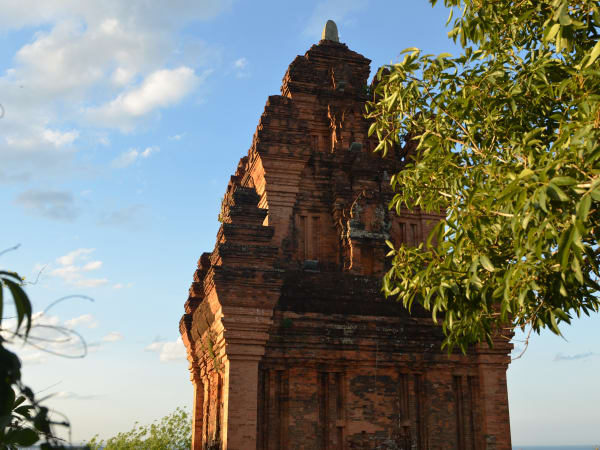
Tháp Nhạn stands on the summit of Núi Nhạn (Swallow Mountain), a 64-metre hill rising from the northern bank of the Đà Rằng River in the centre of Tuy Hòa city, Phú Yên province. The tower was built by the Cham people in the late 11th to early 12th century as a place of worship - dedicated to Thiên Y A Na, a goddess central to Cham religious practice - and is one of the most architecturally significant Cham structures remaining on Vietnam's south-central coast. It stands approximately 20–23.5 metres tall, constructed entirely from fired red brick without visible mortar, in the transitional style between Mỹ Sơn A1 and Bình Định Cham architecture. Lotus carvings ring the base; a stone Linga sits at the peak. The name 'Nhạn' comes from the swallows that once gathered around the mountain in large numbers. The tower was classified as a National Architectural and Artistic Relic in 1988 and upgraded to a Special National Relic in 2018.
Gallery

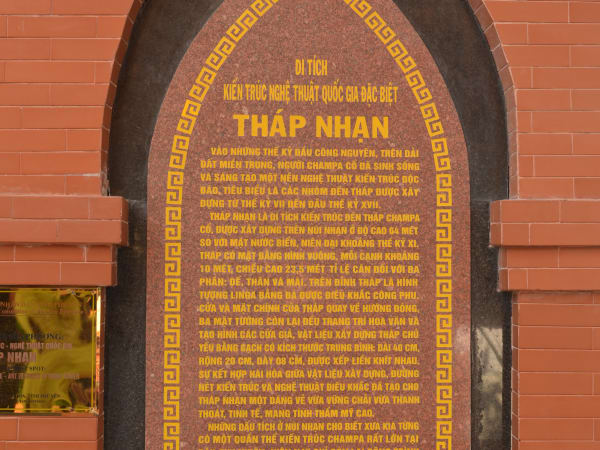
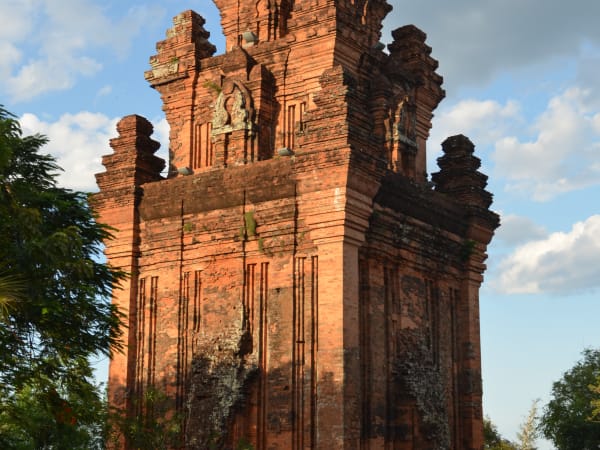
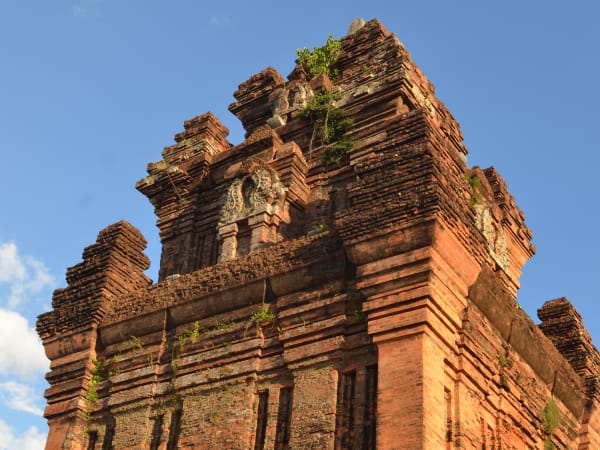

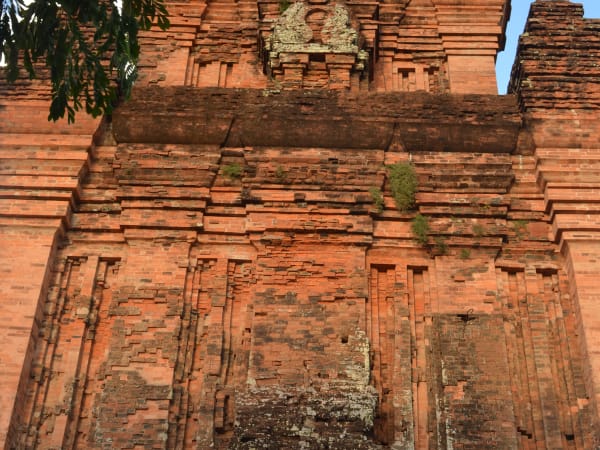



How to Get There
🚗 Getting There
Tháp Nhạn is 1–2km from Tuy Hòa city centre and walkable from the train station. From the station, head along Lê Trung Kiên street, pass the Tân Đà intersection, and look for the road leading up the hill on your left. By motorbike or taxi the base of Núi Nhạn is easy to reach with parking available. The hill has both a staircase and an asphalt road to the summit - about 5–10 minutes on foot. Tuy Hòa is served by the main north–south railway and by Đông Tác Airport with domestic connections.
What to Expect
👀 On the Ground
The tower is remarkably intact, with fine brickwork and carved details that hold up well on close inspection. From the hilltop, views stretch over Tuy Hòa's grid of streets, the broad Đà Rằng River, and the coastline. A war memorial on the hill's western flank commemorates Phú Yên's martyrs from both resistance wars. In the evenings the tower is lit up and visible from across the city. On Saturday evenings a performance programme in the courtyard features traditional music and dance. The atmosphere is calm and uncrowded compared to Mỹ Sơn or the Bình Định towers - Phú Yên sees a fraction of the tourist traffic of its neighbours.
Travel Tips
🧳 Tips
Phú Yên is one of the most rewarding provinces on the central coast for travellers who take time beyond the Gành Đá Đĩa photo stop. Tháp Nhạn is an ideal base for a full-day circuit: north to Gành Đá Đĩa and Bãi Môn–Mũi Điện, south to Vũng Rô Bay and Đại Lãnh Cape. The city is compact, pleasant, and largely unreshaped by beach tourism. The train makes it a natural one-night stop on the Hanoi–Ho Chi Minh City rail journey.
Insider Tips
Based on real traveler experiences and commonly mentioned advice from multiple visitors.
FAQ
Common questions from travelers who've visited this place.
Is there an entrance fee?›
How long does it take to visit?›
What is the best time to visit?›
Nearby Locations
Explore more things to do like this around Vietnam