Overview
Things to Know
What Makes Cầu Ông Cọp Special
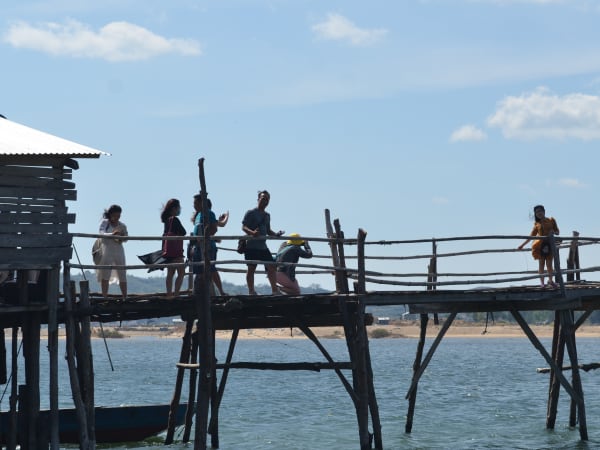
Cầu Ông Cọp is an 800-meter wooden bridge crossing the Bình Bá river in Tuy An district - built entirely from phi lao and eucalyptus timber planks, with bamboo railings, no concrete, no steel, and no engineering firm involved. Local families built it in 1998 to save residents a 14km detour to the nearest highway crossing. Every flood season, parts of it get swept away. Every dry season, the community rebuilds it using the same materials and the same methods, financed by the small toll collected at the entrance. The bridge has been reconstructed at least five to seven times since 1999. It became known beyond Phú Yên after appearing as a filming location in the 2015 film 'Tôi Thấy Hoa Vàng Trên Cỏ Xanh' (Yellow Flowers on the Green Grass) - a critically acclaimed Vietnamese coming-of-age film that put Phú Yên on the domestic tourism map. The bridge's name comes from a nearby shrine: local legend holds that a white tiger once helped a midwife in distress, and after the tiger died, villagers built a small temple - Miếu Ông Cọp - in its honor. The bridge inherited the name.
Gallery





How to Get There
🚗 Getting There
Cầu Ông Cọp is 35km north of Tuy Hòa, in An Ninh Tây commune, Tuy An district. From Tuy Hòa, take National Highway 1A north for around 30km, then turn right onto road ĐH31 toward Tuy An - the bridge is a few kilometers from the turnoff. The ride takes around 50 minutes by motorbike. The bridge also serves as a shortcut on the route to Gành Đá Đĩa: cross it heading north and continue to the rock formation rather than backtracking to the highway. Grab drivers from Tuy Hòa may not know the exact location - show them 'Cầu Gỗ Ông Cọp, An Ninh Tây, Tuy An' in Vietnamese. There is free parking on both sides of the bridge.
What to Expect
👀 On the Ground
The bridge is a working piece of infrastructure, not a tourist installation - motorbikes and locals on foot use it throughout the day as a genuine transport route. It flexes and shakes under weight, the planks are uneven, and gaps between boards are wide enough to catch a wheel. The river below is shallow on the Tuy An side and widens toward the estuary. The surrounding scenery - flat rice fields, low hills, open sky - is quietly beautiful rather than dramatic. There are no cafes, shops, or facilities at the bridge itself. The toll booth at the southern entrance is a small wooden hut where a local family member usually sits. The crossing takes around 10 minutes on foot.
Travel Tips
🧳 Tips
Cầu Ông Cọp fits naturally into a north Phú Yên day loop from Tuy Hòa: head up Highway 1A, cross the bridge, continue to Gành Đá Đĩa (15km further north), then loop back via Nhà Thờ Mằng Lăng on the return. The full circuit is around 100km and covers three of Phú Yên's most distinctive stops in a single day. The bridge is most worth visiting for the experience of crossing it and for the surrounding river scenery - if photography is the main goal, timing around golden hour makes a significant difference to the results.
Insider Tips
Based on real traveler experiences and commonly mentioned advice from multiple visitors.
FAQ
Common questions from travelers who've visited this place.
What is the entrance fee?›
Is the bridge safe to walk on?›
Can I drive a car across?›
Nearby Locations
Explore more things to do like this around Vietnam