Overview
What Makes Mằng Lăng Church Special
Mằng Lăng Church stands on a gentle hill in Tuy An district, 35km north of Tuy Hòa, and holds a specific place in Vietnamese history that goes well beyond its architecture. Built in 1892 by French missionaries, it is the oldest Catholic church still in active use in Vietnam - a red-brick Gothic structure with pointed arches, a twin-bell tower facade, and a nave that seats several hundred. The surrounding grounds are shaded by old trees, the air is quiet, and the congregation is local and devout. But what draws historians and curious travellers here is not the building itself - it is what is kept inside. The church houses the original 1651 edition of 'Phép Giảng Tám Ngày' (Catechism in Eight Days), written by the Jesuit missionary Alexandre de Rhodes. That book is widely credited as the foundational text that standardized chữ Quốc ngữ - the romanized script that Vietnamese is written in today. Without it, Vietnamese would likely still be written in Chinese characters. Mằng Lăng is a quiet, unhurried place that rewards visitors who know what they are looking at.
Gallery



How to Get There
🚗 Getting There
Mằng Lăng Church is 35km north of Tuy Hòa city center, in An Thạch commune, Tuy An district. The most practical way to reach it is by motorbike - take National Highway 1A north from Tuy Hòa, then follow signs toward Tuy An district. The ride takes around 45-50 minutes and passes through flat coastal countryside. Grab is available from Tuy Hòa but drivers may be unfamiliar with the exact location - show them the address in Vietnamese (Nhà Thờ Mằng Lăng, An Thạch, Tuy An). There is no public bus that stops directly at the church. Parking at the site is free.
What to Expect
👀 On the Ground
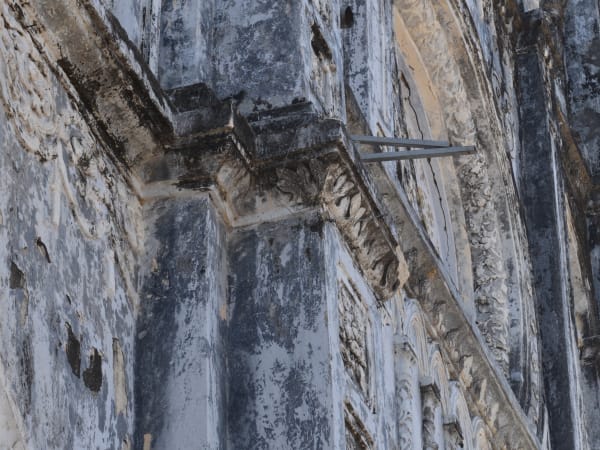
The church exterior is the main visual draw - red brick, Gothic arches, and a facade that looks transplanted from rural France into Vietnamese rice-field country. The interior is modest: wooden pews, stained glass, and a simple altar. The historic book is kept in a glass display case near the entrance, though access depends on whether the church is open to visitors at the time of arrival - a caretaker is usually present during daytime hours. The grounds are well-maintained and peaceful. There are no food vendors or tourist facilities at the site itself. The surrounding landscape - low hills, rice paddies, the wide Tuy An plain - is worth spending time in before or after the visit.
Travel Tips
🧳 Tips
Mằng Lăng works best as part of a Phú Yên day trip rather than a standalone destination. The most logical combination is to pair it with Gành Đá Đĩa - the UNESCO-nominated basalt rock plateau 15km further north along the coast - making a single route: Tuy Hòa north to Mằng Lăng, then continue to Gành Đá Đĩa, then return south. The full loop is around 100km and takes a comfortable day on a motorbike. Travellers based in Quy Nhơn can also reach Mằng Lăng as a day trip south - it sits roughly halfway between Tuy Hòa and the Bình Định border.
Insider Tips
Based on real traveler experiences and commonly mentioned advice from multiple visitors.
FAQ
Common questions from travelers who've visited this place.
Is there an entry fee to visit Mằng Lăng Church?›
Can I see the first Vietnamese script book?›
How far is Mằng Lăng Church from Tuy Hòa City?›
Nearby Locations
Explore more things to do like this around Vietnam