Overview
Things to Know
What Makes Ghềnh Đá Đĩa (Plate Rock Reef) Special
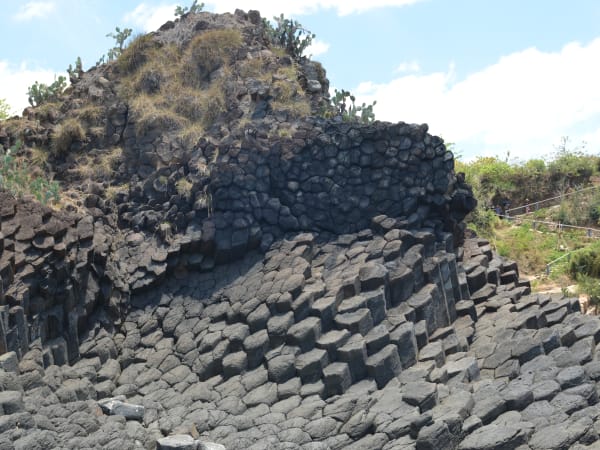
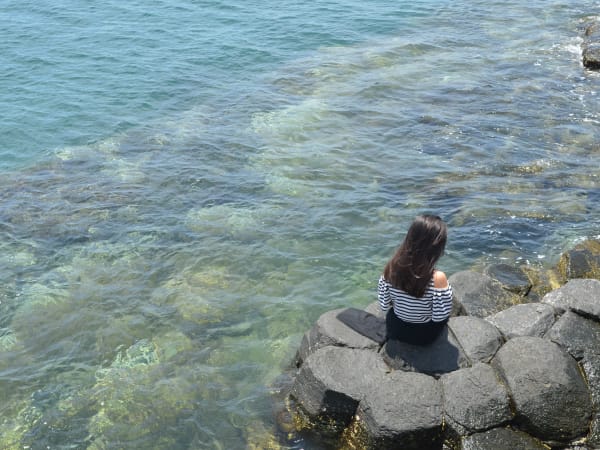
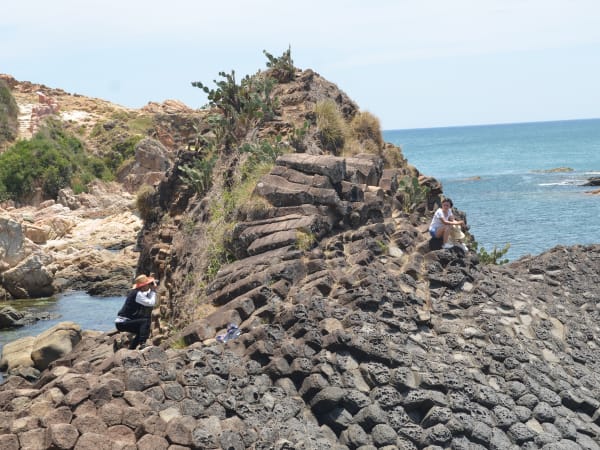
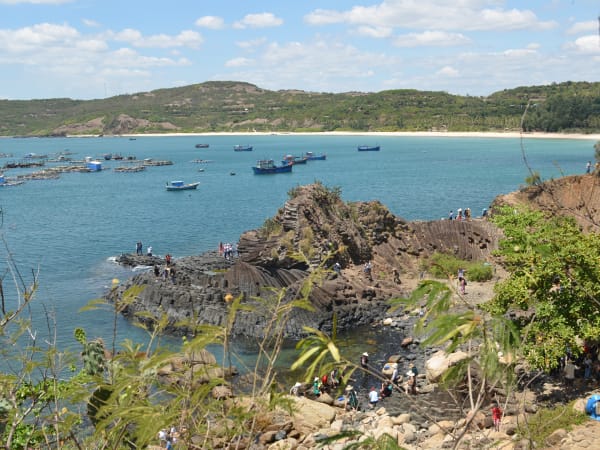
Ghềnh Đá Đĩa - literally 'Plate Rock Reef' - is a coastal formation on Phú Yên's northern shoreline where basalt columns have fractured into tight hexagonal stacks that extend directly into the South China Sea. The formation is the result of ancient volcanic lava cooling slowly against seawater, a process that produces the characteristic columnar jointing visible in the rock faces. Vietnam has few geological formations of this kind at sea level, which makes Ghềnh Đá Đĩa genuinely unusual in a country where most coastal scenery is defined by limestone karst or sandy beach. The reef sits at the base of a low headland in Tuy An district, accessible by a short path from the road. At low tide the full extent of the columns is exposed - stacked plates of basalt ranging from fist-sized to table-wide, fitted together without mortar like a natural mosaic extending into the surf.
Gallery



How to Get There
🚗 Getting There
Ghềnh Đá Đĩa is located in An Ninh Đông commune, Tuy An district, approximately 50km north of Tuy Hòa city. By motorbike from Tuy Hòa, follow National Highway 1A north then take the coastal road - the trip takes about 1 hour. From Quy Nhơn to the north, the reef is around 80km south, roughly 1.5 hours by motorbike. There is no direct public transport to the reef; renting a motorbike in Tuy Hòa is the most practical option. A small car park and ticket booth mark the entrance.
What to Expect
👀 On the Ground
A short path leads from the entrance down to the reef edge. The basalt columns are immediately impressive up close - the geometric precision of the hexagonal fractures looks almost engineered. The reef extends maybe 100 metres along the shore and 30–40 metres out to sea at low tide. Waves push between the columns and fill the pools in the lower sections. The sound and movement of water through the rock is constant. At high tide the outer formations are submerged and the accessible area shrinks. Photography here is straightforward - almost any composition pointing seaward works, and the rock texture holds detail well in direct light.
Travel Tips
🧳 Tips
Ghềnh Đá Đĩa is the kind of place where the formation itself is the entire point - there is no nearby town, no beach, and limited facilities beyond a few drink stalls at the entrance. Plan to spend 1–2 hours, combine it with other Phú Yên coastal stops, and time arrival for low tide if possible. The reef has appeared in enough travel photography that some visitors arrive with specific compositions in mind - the reality matches the photos, which is not always the case with natural landmarks. Phú Yên remains one of the least-touristed coastal provinces in central Vietnam, and the reef sees a fraction of the crowds that equivalent formations would attract further south.
Insider Tips
Based on real traveler experiences and commonly mentioned advice from multiple visitors.
FAQ
Common questions from travelers who've visited this place.
When is the best time to visit to avoid crowds?›
What is the entry fee and parking cost?›
How hot is it and what should I bring?›
Explore more things to do like this around Vietnam