Overview
Things to Know
What Makes Thiên Mụ Pagoda Special
Thiên Mụ Pagoda - 'Pagoda of the Celestial Lady' - was founded in 1601 by Nguyễn Hoàng, the lord who first established Nguyễn rule over southern Vietnam, after a local woman reportedly appeared on the hill and predicted that a lord would come to build a pagoda to strengthen the nation. The seven-tiered Phước Duyên Tower, built in 1844 under Emperor Thiệu Trị, rises 21 metres above a bend in the Perfume River and has appeared on Vietnamese currency, stamps, and in the background of more photographs of Huế than any other structure. The pagoda has been rebuilt and expanded through the centuries - destroyed, restored, expanded, partially damaged again - and today is an active Buddhist monastery housing around 100 monks. In one corner of the grounds sits a pale blue Austin Westminster car, preserved under glass, that carried monk Thích Quảng Đức to his self-immolation in Saigon on June 11, 1963 - the act that contributed directly to the fall of the Diệm government and became one of the defining images of the Vietnam War era.
Gallery



How to Get There
🚗 Getting There
Thiên Mụ Pagoda is 4km west of central Huế, on the north bank of the Perfume River. The most scenic approach is by dragon boat from the dock near Trần Tiến Street in central Huế - a 30-minute river journey that delivers the classic tower-above-trees view. Alternatively, the pagoda is easily reached by bicycle, motorbike, or Grab along the riverside road (Đường Kim Long). Most travellers combine the pagoda with the Imperial City and a royal tomb in a single full day of Huế sightseeing.
What to Expect
👀 On the Ground
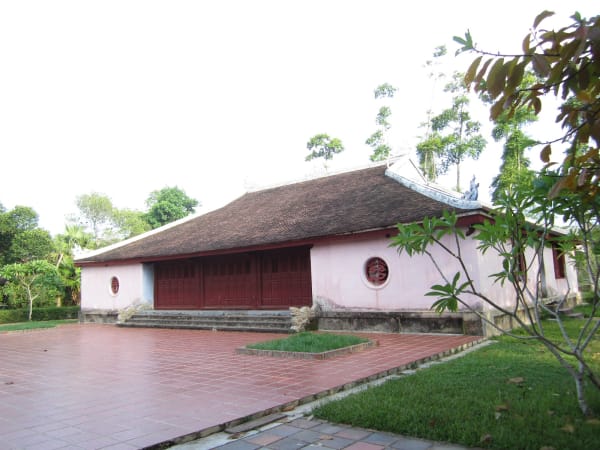
The main draw is the Phước Duyên Tower - seven octagonal tiers of diminishing size, brick-red against the tree canopy, visible from the river before you dock. The tower is not climbable but can be circumnavigated and photographed from multiple angles in the surrounding garden. Behind the tower, the main sanctuary hall contains a large bronze bell cast in 1710 (reportedly audible 10km away) and a marble tortoise carrying a stone stele recording the pagoda's history. The rear gardens are planted with bonsai and flowering trees maintained by the monks. The Austin car is in a covered display area on the right side of the compound, accompanied by a photograph of Thích Quảng Đức's self-immolation.
Travel Tips
🧳 Tips
Thiên Mụ is the most photographed landmark in Huế and genuinely merits the reputation - the tower, the river, and the garden create a composition that photographs well at almost any time of day. The boat approach from central Huế is worth doing at least one-way; returning by motorbike or Grab along the riverside road gives a different perspective on the Kim Long neighbourhood. The pagoda is free to enter, takes about 45–60 minutes to explore fully, and is most meaningful with some background on the history of the car and the monk - one of the most consequential objects in a Vietnamese religious site anywhere in the country.
Insider Tips
Based on real traveler experiences and commonly mentioned advice from multiple visitors.
FAQ
Common questions from travelers who've visited this place.
What are the dress code requirements at Thiên Mụ Pagoda?›
When is the best time to visit to avoid crowds?›
How much does it cost to visit and what about parking?›
Nearby Locations
Explore more things to do like this around Vietnam