Overview
Things to Know
What Makes Ta Pa Temple Special
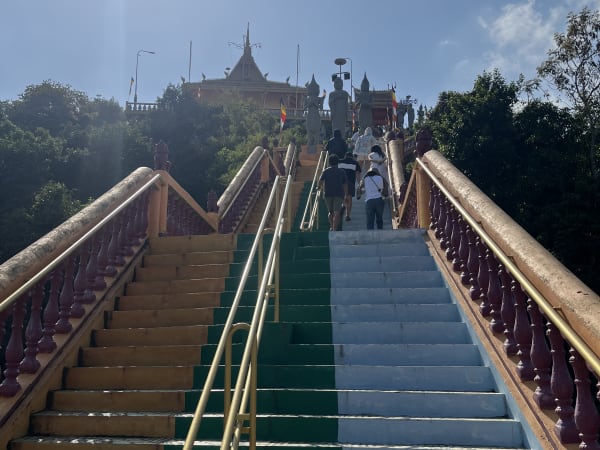
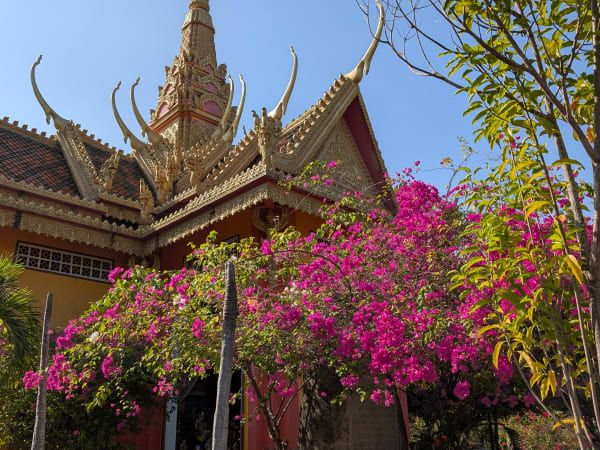
Ta Pa Temple sits in the Thất Sơn hills of Tri Tôn district, An Giang province, in the flat agricultural land near the Cambodian border. The temple is a Khmer Buddhist complex built into and around a granite hill, with shrines, pagodas, and meditation spaces distributed across the hillside - a form of sacred landscape common to Khmer religious sites throughout the Mekong region. The area around Ta Pa carries historical weight that gives the visit a dimension beyond the religious: in April and May 1978, Khmer Rouge forces crossed the border and massacred over 3,000 Vietnamese civilians in the villages of the Ba Chúc area. Ta Pa Temple and the surrounding hills were used by survivors as refuge during the attacks. The nearby Ba Chúc Bone Temple memorialises the victims with a glass ossuary containing the remains of the dead.
Gallery




How to Get There
🚗 Getting There
Ta Pa Temple is located near Ba Chúc village in Tri Tôn district, approximately 50km southwest of Châu Đốc city and 90km from Long Xuyên. By motorbike from Châu Đốc, follow the road south toward Tri Tôn through the Thất Sơn hills - the journey takes about 1 hour. From Long Xuyên, the drive is approximately 1.5 hours. The temple is signposted from the Ba Chúc area. The Ba Chúc Bone Temple is in the village itself, a short distance from Ta Pa.
What to Expect
👀 On the Ground
The temple complex spreads across a granite hillside with paths connecting shrines at various elevations. Khmer Buddhist iconography - Buddha images, nagas, decorative stucco - appears throughout the structures. Monks are present and the site is in active religious use. The upper section of the hill has views over the surrounding rice plain. The Ba Chúc village nearby has the Bone Temple memorial - a glass structure containing the skulls and bones of massacre victims, directly comparable in function to Cambodia's Killing Fields memorials across the border. The combination of religious site and genocide memorial makes this one of the most historically layered locations in the Mekong Delta.
Travel Tips
🧳 Tips
Ta Pa and the Ba Chúc area are not easy visits emotionally - the Bone Temple is a direct confrontation with mass killing that occurred within living memory, and the context of Khmer Rouge violence along this border is not widely known outside Vietnam and Cambodia. For travellers interested in 20th century Southeast Asian history beyond the American war narrative, the western An Giang border area provides a different and underrepresented chapter. The Thất Sơn hills in which the site sits are also culturally significant in Vietnamese Buddhism - a complex of sacred hills associated with millennia of religious practice by Khmer, Vietnamese, and Cham communities.
Insider Tips
Based on real traveler experiences and commonly mentioned advice from multiple visitors.
FAQ
Common questions from travelers who've visited this place.
What are the two ways to reach the temple?›
Is the temple accessible for photography?›
When should I visit to avoid difficulties?›
Nearby Locations
Explore more things to do like this around Vietnam