Overview
Things to Know
What Makes Trà Sư Cajuput Forest Special
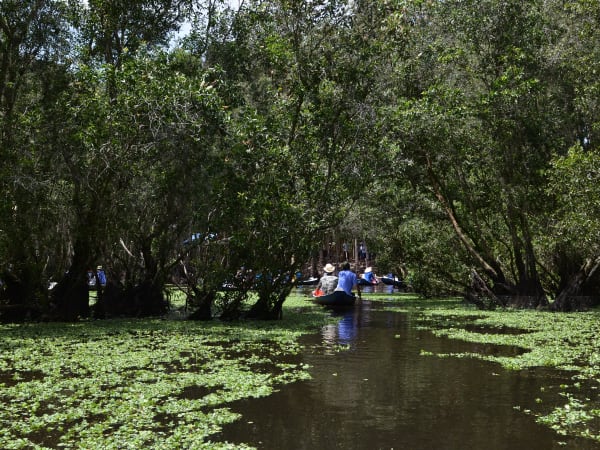
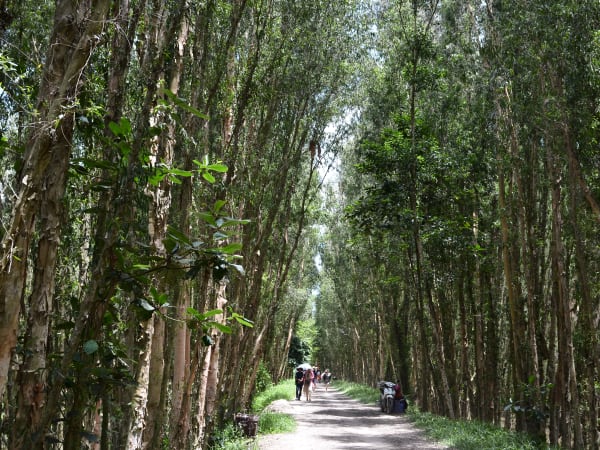
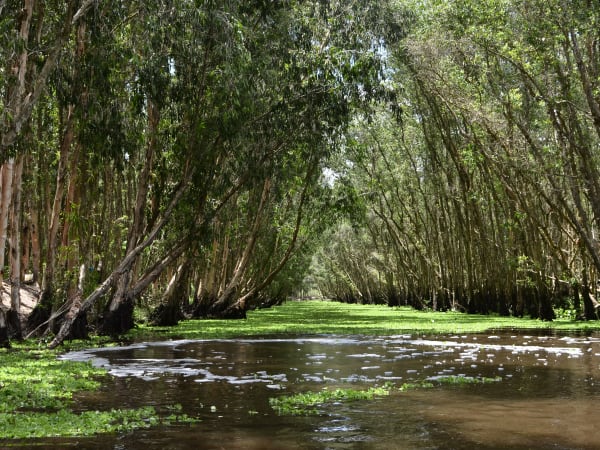
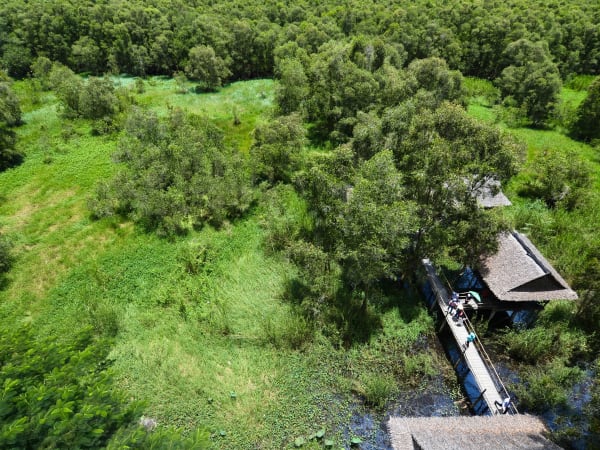
Trà Sư Cajuput Forest covers 850 hectares of seasonally flooded wetland in Tịnh Biên district, An Giang province, near the Cambodian border. The forest is dominated by cajuput trees - a species of Melaleuca that tolerates prolonged inundation and forms the characteristic pale-trunked, dense-canopied woodland found across the Mekong floodplain. During the annual flood season from September to November, the Mekong's rising waters inundate the forest floor and transform the landscape: the trees stand in still green water that mirrors the canopy overhead, creating the flat reflective images that have made Trà Sư one of the most photographed natural landscapes in southern Vietnam. The forest is also a protected bird sanctuary supporting colonies of large waterbirds - herons, egrets, cormorants, and painted storks nest here in numbers rarely seen elsewhere in the delta.
Gallery




How to Get There
🚗 Getting There
Trà Sư is located in Văn Giáo commune, Tịnh Biên district, approximately 30km southwest of Châu Đốc city. By motorbike from Châu Đốc, follow the road toward the Cambodian border at Tịnh Biên - the forest entrance is clearly signposted. The journey takes about 45 minutes. From Long Xuyên (An Giang provincial capital), the drive is around 1.5 hours. Organised day tours from Châu Đốc are widely available and typically include transport, entrance fees, and the boat tour. The entrance area has a ticket office, boat dock, and basic food stalls.
What to Expect
👀 On the Ground
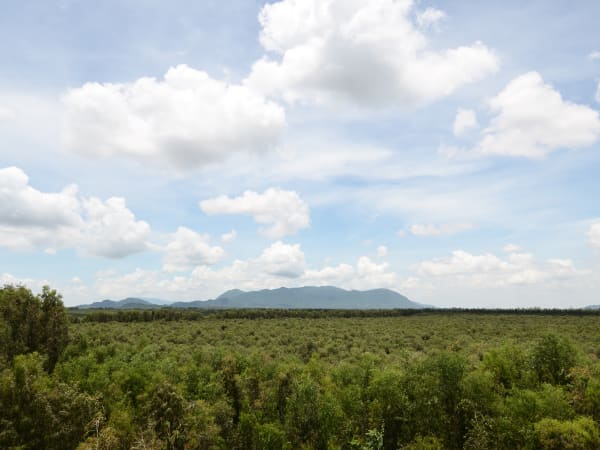
The visit is structured around a rowboat tour through the forest waterways. Flat-bottomed wooden boats carry 4-6 passengers and are propelled by a single rower through channels that weave between cajuput trunks. The canopy closes overhead in the denser sections, filtering the light green. Bird colonies are visible in the upper canopy - large nesting aggregations of herons and cormorants are audible from a distance. The tour takes 1.5-2 hours and covers the main waterway network. A watchtower at the edge of the forest provides an elevated view over the canopy. The overall pace is slow and quiet - the rowboat format means no engine noise.
Travel Tips
🧳 Tips
Trà Sư is one of the few Mekong Delta natural sites where the experience genuinely matches the photography - the flooded forest is as green and mirror-flat in person as in the images that circulate online, provided mày visit during the right season. Outside flood season the water level drops, the reflection disappears, and the forest becomes a drier cajuput woodland that is pleasant but lacks the visual drama. Châu Đốc is the natural base for the area - a river town with Cham Muslim communities, floating fish farms, and the sacred Bà Chúa Xứ temple on Sam Mountain - and Trà Sư fits into a broader An Giang itinerary rather than requiring a standalone trip.
Insider Tips
Based on real traveler experiences and commonly mentioned advice from multiple visitors.
FAQ
Common questions from travelers who've visited this place.
What are the total costs for a full visit?›
How far is Tra Su from Chau Doc and how do I get there?›
What wildlife can I expect to see?›
Nearby Locations
Explore more things to do like this around Vietnam