Overview
Things to Know
What Makes Mạc Dynasty Citadel Special
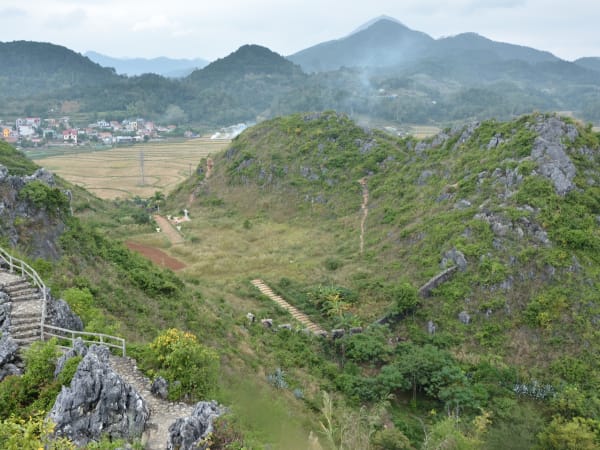
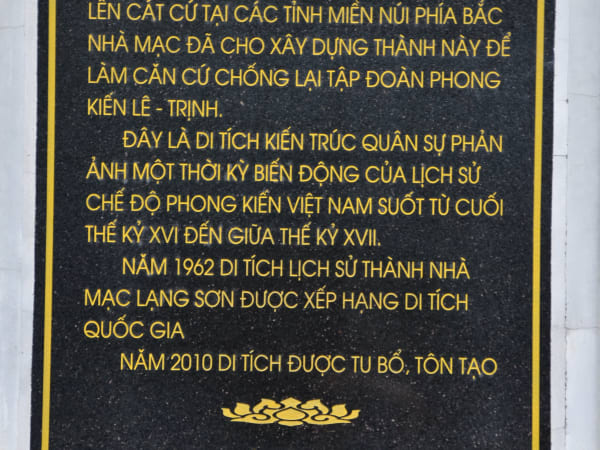
The Mạc Dynasty Citadel (Thành Nhà Mạc) is a 16th-century fortification built by the Mạc lords in their mountain stronghold of Cao Bằng after being driven from Thăng Long by the Lê–Trịnh forces in 1592. For nearly a century, the Mạc clan controlled this remote border region and constructed a series of citadels to defend their territory - the Quảng Hòa citadel is among the best-preserved remnants of this period. Stone walls, gate foundations, and ramparts survive across a dramatic karst landscape that made natural military sense: ridgelines, river bends, and sheer cliff faces all incorporated into the defensive design. It is one of the least-visited significant historical sites in northern Vietnam, which is both its main drawback (limited infrastructure, sparse interpretation) and its appeal.
Gallery




How to Get There
🚗 Getting There
Cao Bằng city is the base for visiting the citadel, roughly 300km from Hanoi via National Highway 3 - a journey of 6–7 hours by car or bus. From Cao Bằng city, the citadel in Quảng Hòa district is approximately 30km southeast. Motorbike is the most practical transport for the final stretch, either rented in Cao Bằng or arranged through your guesthouse. The road quality is reasonable by Cao Bằng standards but involves some unpaved sections near the site.
What to Expect
👀 On the Ground
The citadel is a ruin site rather than a reconstructed attraction - expect partially standing stone walls, overgrown ramparts, and a few preserved gate structures. There is no ticketing booth, no visitor center, and no formal tour infrastructure. What you get instead is direct, unmediated contact with a genuinely old piece of Vietnamese history in a landscape that has changed remarkably little. The local commune around the site is small and agricultural. Allow 1–2 hours to walk the perimeter and explore the main structures.
Travel Tips
🧳 Tips
This is a site for travelers who find the absence of tourist infrastructure refreshing rather than frustrating. The Mạc citadel rewards curiosity - knowledge of Vietnamese history, or a decent briefing beforehand, makes the visit significantly richer. If mày is already doing the Cao Bằng loop (Bản Giốc, Ngườm Ngao, Pác Bó), the citadel adds historical depth to what is otherwise a landscape-and-nature itinerary. Don't skip it for time - the detour is short and nothing else in Vietnam covers this particular chapter of history in physical form.
Insider Tips
Based on real traveler experiences and commonly mentioned advice from multiple visitors.
FAQ
Common questions from travelers who've visited this place.
How long does it take to hike all the peaks?›
Do I need a guide or tour to visit?›
What are weather conditions like for visiting?›
Nearby Locations
Explore more things to do like this around Vietnam