Menu
ProvincesLocationsExperiencesBlogMap
📍 mountain · nature · temple · heritage

Yên Tử Mountain

Yên Tử Mountain is Vietnam's most sacred Buddhist peak - a 1,068m forested summit in Quảng Ninh where King Trần Nhân Tông abdicated to become a monk in the 13th century, founding the Vietnamese Trúc Lâm Zen school.

⛰️ Sacred Peak🛕 Buddhist Pilgrimage🥾 Summit Trek🌲 Ancient Forest
🧭 Get Directions
Best Time to Visit
📅 Oct - Apr (dry season; the spring pilgrimage season Jan - Mar is culturally rich but extremely crowded)
Entry Fee
🎟️ ~40,000 VND; cable car additional ~200,000 VND one way
Opening Hours
🕐 5:00 AM - 5:00 PM
Address
📌 Thượng Yên Công, Uông Bí, Quảng Ninh
👥Crowds
Extremely crowded during Lunar New Year and Tet holidays (January-March lunar calendar). February-April sees peak foreign tourism. Normal days are quieter with fewer tourists.
🥾Difficulty
Moderate to challenging. Even with cable cars, expect significant walking and 1000+ meters of climbing on uneven cobblestone steps and stone paths. Hiking option takes 8 hours total; cable car plus hiking takes 4+ hours. Suitable for 80+ year-olds but requires fitness and good shoes.
⚠️Safety
Top of mountain lacks fences around rocks. Crowding during peak seasons creates safety hazards with pushing and jostling. Final climbing section over steep stones can be dangerous. Best visited on normal days, not holidays.
🚶Accessibility
Cable car accessible to most visitors, including those with mobility issues. However, two cable car segments with mandatory walking and climbing between them. Five-year-old children managed descent but final section challenging for families.
🌤️Seasonal
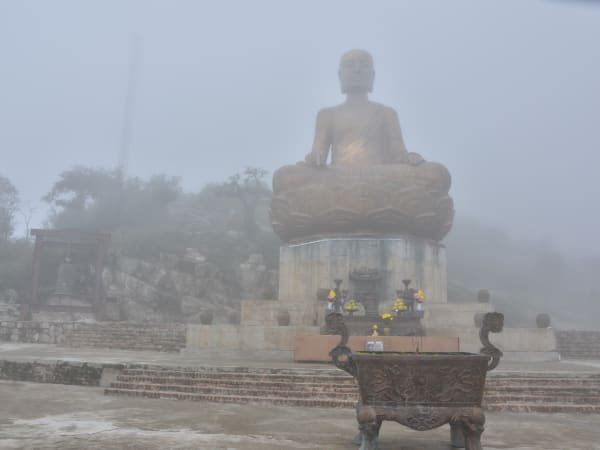
Avoid February-April lunar calendar for fewer crowds. Weather critical—fog common on some days, obscuring views. Check weather before visiting. January can be very crowded due to Tet holiday.

What Makes Yên Tử Mountain Special

Yên Tử Mountain rises to 1,068 metres in Uông Bí district, Quảng Ninh province, and holds a position in Vietnamese Buddhism that has no equivalent elsewhere in the country. In 1299, King Trần Nhân Tông - the monarch who had twice led Vietnamese forces to defeat the Mongol invasions - abdicated his throne and climbed Yên Tử to live as a monk, eventually founding the Trúc Lâm school of Zen Buddhism, the only indigenous Buddhist school in Vietnamese history. The mountain became the spiritual centre of this tradition, and the pilgrimage route up its forested slopes has been walked continuously for over 700 years. Today the route passes through a complex of pagodas, meditation halls, and shrines spanning multiple centuries, set within a forest that includes ancient bronze-leafed trees found nowhere else in Vietnam.

🚗 Getting There

Yên Tử is located in Uông Bí city, approximately 50km from Hạ Long Bay and 130km from Hanoi. By car or motorbike from Hanoi, follow Highway 18 east through Bắc Ninh and Uông Bí - the journey takes around 2.5 hours. From Hạ Long city, the drive is about 1 hour west on Highway 18. Organised day tours from Hanoi and Hạ Long are widely available. A large car park at the base of the mountain serves as the starting point for both the walking trail and the cable car.

👀 On the Ground

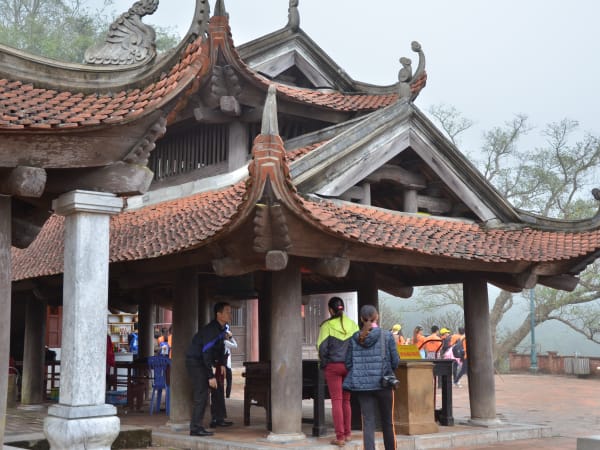
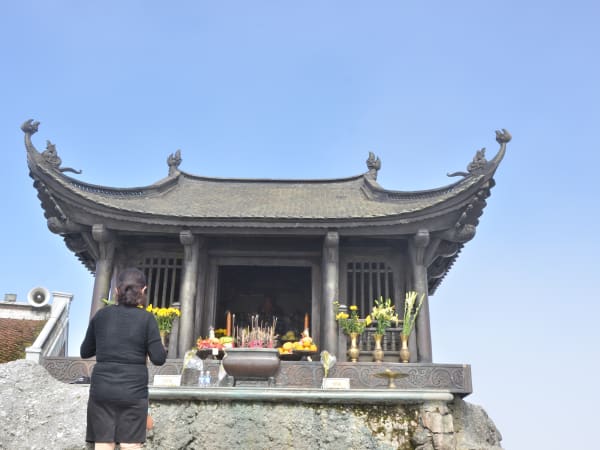
The route to the summit passes through three distinct cable car sections and multiple walking segments connecting pagoda complexes along the way. Key stops include Giải Oan Pagoda, Hoa Yên Pagoda (the largest complex on the mountain, set in ancient forest at around 500m), and the final bamboo forest section leading to the summit shrine. The trail is well-maintained and clearly marked. The forest around the upper section is genuinely old-growth in character - moss-covered stones, large canopy trees, and the quiet of altitude. The summit holds a bronze statue of Trần Nhân Tông and a small pagoda where incense burns continuously.

🧳 Tips

Yên Tử works best when treated as a pilgrimage rather than a hike - the stops along the way at the various pagoda complexes are as important as the summit view. The mountain has particular meaning for Vietnamese visitors, and observing the pilgrimage behaviour - offerings, prayers, the physical effort made by elderly devotees - gives the climb a cultural dimension that elevates it beyond a standard trek. Avoid major Vietnamese holidays unless experiencing the festival atmosphere is specifically the goal. The cable cars reduce the physical demand significantly but the walking sections between stations still require reasonable fitness.

Based on real traveler experiences and commonly mentioned advice from multiple visitors.

Take cable cars only if clear weather—fog frequently blocks views. Consider hiking trails for fewer crowds and smaller shrines missed by 99% of cable car users.
Bring good hiking shoes, prepare for extensive steps and uneven cobblestone paths. Pack snacks—vendors on trails charge steep prices.
Stay at Legacy Resort Yen Tu at mountain base; 30 minutes from Hai Phong, 3 hours from Hanoi. Roadside restaurants offer affordable prices.
The full trek to the summit takes 4-6 hours one way on foot - start at dawn if walking the entire route to avoid the midday heat and afternoon crowds
A cable car system covers two sections of the route - most visitors combine cable car with walking rather than doing the full ascent on foot
The spring pilgrimage season (Jan - Mar, peaking around Tết) draws hundreds of thousands of Vietnamese pilgrims - the atmosphere is extraordinary but the crowds are intense
The ancient bronze statue of King Trần Nhân Tông at the summit is the spiritual endpoint of the pilgrimage - the walk through bamboo forest on the final section is the most beautiful part of the route
Dress modestly throughout - Yên Tử is an active religious site with dozens of pagodas and shrines along the trail

Common questions from travelers who've visited this place.

How much time do I need to visit Yên Tử?
Plan 3-4 hours for sightseeing plus travel time. Full hike takes 8 hours. Cable car plus partial hike takes 4+ hours. Day trip from Hanoi (3 hours away) is feasible.
What is the cable car cost and system?
Two cable car segments cost 390,000 VND total. System requires switching between two cable cars. Trolleybus available to first cable car. Still requires significant walking between segments and after final cable car.
When should I avoid visiting due to crowds?
Avoid Lunar New Year, Tet holidays (January-March lunar calendar), and February-April for foreign tourists. Peak crowding creates safety risks at summit with limited fencing around rocks.