Overview
Things to Know
What Makes Khe Van Waterfall Special
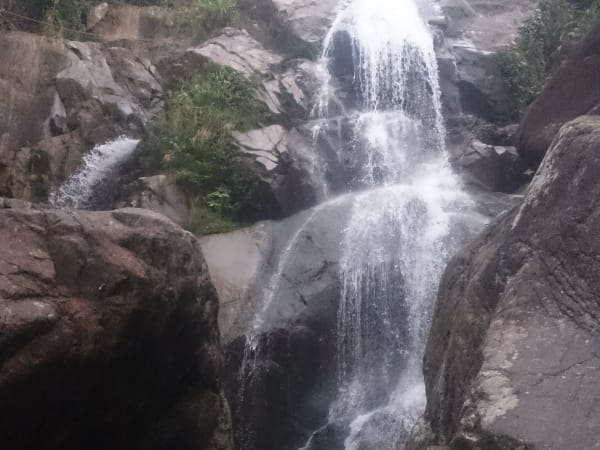
Khe Van Waterfall sits in Huc Dong Commune in Binh Lieu District - a mountainous border area in the far northeast of Quang Ninh province, about 100km from Ha Long City and a world away from its tourism infrastructure. The waterfall is the largest in Quang Ninh province, dropping in three consecutive tiers through dense subtropical forest from a source high in the Khe Van - Thong Chau mountain range. Its name comes from the Tay language: 'khe' means stream, 'van' means smoke or mist - a reference to the spray that rises from the lower pool on heavy flow days. The surrounding area is San Chi, Tay, and Dao ethnic minority territory, and the waterfall has a cultural dimension that most natural attractions in Vietnam lack: it has traditionally been a meeting place for San Chi couples, who come to sing soong co, a form of call-and-response folk song unique to the group. Almost no foreign tourists make it here.
Gallery



How to Get There
🚗 Getting There
From Hanoi, the most practical route is via National Highway 18A to Tien Yen town, then National Highway 18C northeast to Binh Lieu town - total distance around 270km, roughly 5 to 6 hours by car or motorbike. From Ha Long City, follow Highway 18 northeast to Hoanh Mo intersection, turn onto Highway 18C to Binh Lieu - about 120km, 2 to 3 hours. From Binh Lieu town, the waterfall is 12 to 14km southeast toward Huc Dong Commune. Follow signs to the Khe Van tourism area, park at the trailhead near the commune, and walk around 15 minutes along a dirt path to the base of the falls. A motorbike is the most flexible way to do the final stretch from Binh Lieu.
What to Expect
👀 On the Ground
The waterfall has three distinct tiers, each with its own character. The first tier is the most accessible - a wide space with a large central rock and scattered stones around a clear pool, where the water flow from above spills into a natural basin. The second tier splits into two parallel streams running side by side, feeding into a wide shallow lake with flat stones ideal for sitting - this is where most visitors swim. The third and uppermost tier is the most dramatic, with water dropping from the cliff face into a larger lake surrounded by cliff flowers and hanging vegetation. The scramble between tiers requires some care - the bedrock is bare and slippery, particularly in wet season. The surrounding forest is dense and largely intact, and the walk in passes through terraced rice fields and San Chi village houses.
Travel Tips
🧳 Tips
Khe Van is genuinely remote and that is its appeal - do not expect tourist facilities beyond a basic parking area and a few food stalls near the trailhead. Binh Lieu town has guesthouses and local restaurants and works well as a base for a one or two night stay. The waterfall pairs well with the Binh Lieu border trekking routes and Cao Ly Mountain if you want a full outdoor itinerary in the district. Late October and November add a bonus: the surrounding hills enter reed flower season and the entire Binh Lieu landscape shifts to a silver-white that is highly photogenic alongside the waterfall. If arriving from Ha Long, this makes an excellent detour on a self-drive loop rather than an out-and-back trip.
Insider Tips
Based on real traveler experiences and commonly mentioned advice from multiple visitors.
FAQ
Common questions from travelers who've visited this place.
Is there an entrance fee to visit the waterfall?›
How do I reach the waterfall from Ha Long or nearby towns?›
When is the best time to visit for swimming?›
Nearby Locations
Explore more things to do like this around Vietnam