Overview
Things to Know
What Makes One Pillar Pagoda Special
The One Pillar Pagoda - Chùa Một Cột in Vietnamese - is a small Buddhist shrine rising from a square lotus pond in the Ba Đình district of Hanoi, recognised as one of the defining architectural symbols of the Vietnamese capital. The original pagoda was built in 1049 by Emperor Lý Thái Tông of the Lý dynasty, who according to historical accounts ordered its construction following a dream in which the bodhisattva Quan Âm (Goddess of Mercy) appeared to him seated on a lotus flower and presented him with a son. The emperor, who had been childless, subsequently had a son and built the pagoda in gratitude. The structure's design - a single wooden chamber perched on a stone pillar rising from a pond - was intended to evoke a lotus blossom emerging from water, the Buddhist symbol of enlightenment arising from the impurity of the world. The current structure is a 1955 reconstruction following French demolition of the original before their withdrawal from Hanoi.
Gallery


How to Get There
🚗 Getting There
The One Pillar Pagoda is located in the Ba Đình district of central Hanoi, immediately southwest of the Ho Chi Minh Mausoleum complex. From Hoàn Kiếm Lake, it is approximately 3km west - easily reached by taxi, Grab, or a 40-minute walk through the French Quarter and along Điện Biên Phủ street. The nearest major landmarks for navigation are the Ho Chi Minh Mausoleum and Ba Đình Square. Many visitors combine the pagoda with the mausoleum in a single morning visit.
What to Expect
👀 On the Ground
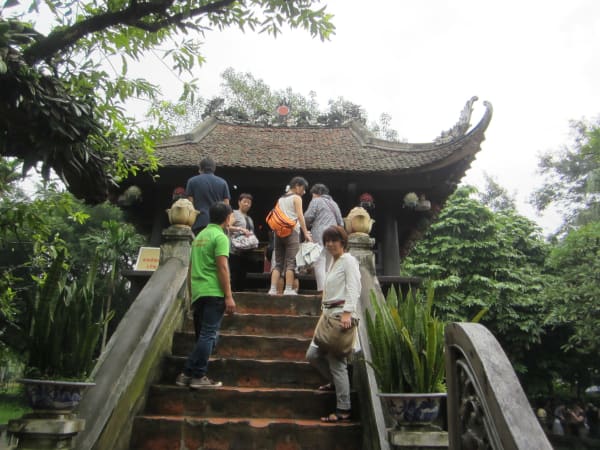
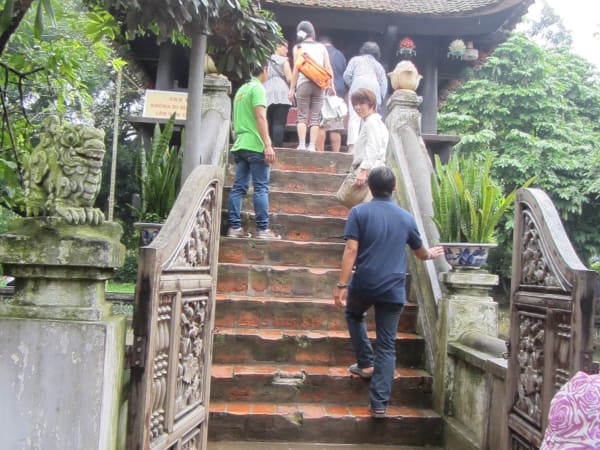
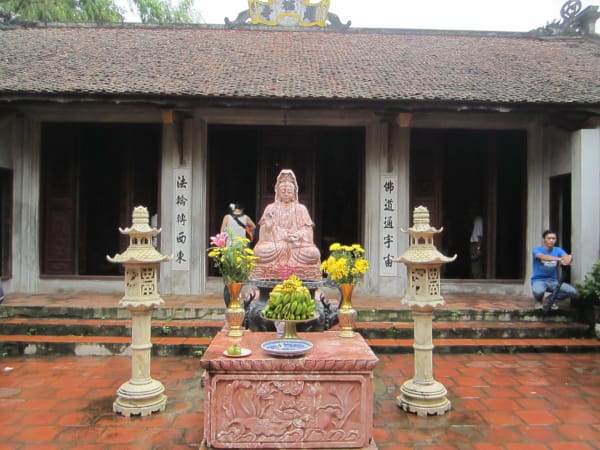
The pagoda itself is compact - the wooden shrine room is approximately 3 metres square, sitting atop a single stone pillar 1.25 metres in diameter and about 4 metres tall. Visitors climb a short staircase to view the altar dedicated to Quan Âm. The surrounding square pond and its lotus plants form the main visual element of the site. A small courtyard with ancient frangipani trees and stone inscriptions surrounds the pond. The pagoda functions as an active shrine - incense burns at the altar and Vietnamese worshippers visit regularly. The entire site is small enough to explore in 20-30 minutes, making it well-suited as part of a broader Ba Đình district itinerary.
Travel Tips
🧳 Tips
The One Pillar Pagoda is a site where understanding its cultural significance rewards a longer pause than the structure's small scale might suggest. It appears on Vietnamese currency and represents an architectural tradition that has no direct equivalent elsewhere - the deliberate encoding of Buddhist cosmology into building form, in a structure that has been rebuilt and venerated continuously for nearly a thousand years despite war, occupation, and demolition. The pagoda is best visited in the morning when the light is favourable for photography and before the midday tour bus arrivals. Pairing it with a proper visit to the Ho Chi Minh Mausoleum (note: closed afternoons and Mondays/Fridays) makes for a coherent morning in Ba Đình.
Insider Tips
Based on real traveler experiences and commonly mentioned advice from multiple visitors.
FAQ
Common questions from travelers who've visited this place.
Is there an entrance fee?›
What is the dress code?›
How long does a visit take?›
Nearby Locations
Explore more things to do like this around Vietnam