Overview
Things to Know
What Makes Temple of Literature Special
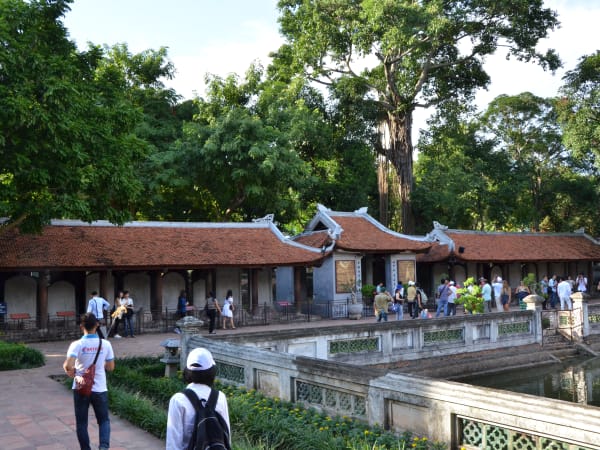
The Temple of Literature (Văn Miếu - Quốc Tử Giám) was founded in 1070 under Emperor Lý Thánh Tông, initially as a temple dedicated to Confucius, and expanded in 1076 to include the Quốc Tử Giám - Vietnam's first national university, where the children of the royal family and senior mandarins were educated. The institution operated for 700 years under successive dynasties until the French colonial administration replaced it with a Western-style education system in the early 20th century. The physical complex survived largely intact and remains the best-preserved example of traditional Vietnamese architectural design in Hanoi - five sequential courtyards progressing from the main gate to the inner sanctuary, each with its own character and function. The 82 stone doctoral steles, erected between 1484 and 1779, are listed by UNESCO as a Memory of the World documentary heritage and represent the most tangible surviving record of Vietnam's classical examination system.
Gallery





How to Get There
🚗 Getting There
The Temple of Literature is in Đống Đa district, approximately 2km southwest of Hoàn Kiếm Lake in central Hanoi. On foot from the Old Quarter, the walk takes about 25-30 minutes through the French Quarter. By taxi or Grab from Hoàn Kiếm takes 10 minutes. Several bus routes pass on Quốc Tử Giám street. The site is on Văn Miếu Street with the main entrance clearly marked - parking for motorbikes is available on the surrounding streets.
What to Expect
👀 On the Ground
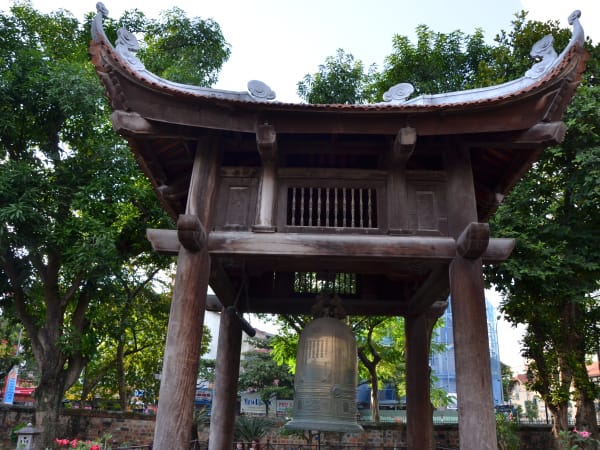
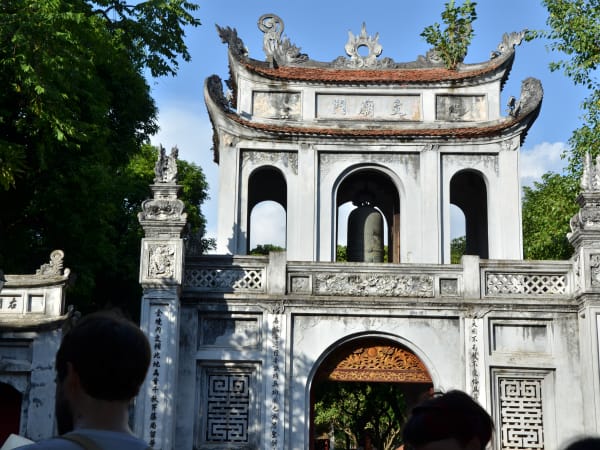
The complex is organized as five successive courtyards entered through a series of gates. The first two courtyards are landscaped gardens leading to the Khuê Văn Các pavilion - the most photographed structure, also depicted on the 100,000 VND banknote. The third courtyard contains the Thiên Quang Tĩnh reflecting pool flanked by the 82 doctoral steles. The fourth courtyard holds the main temple with statues of Confucius and his four principal disciples. The fifth courtyard contains the reconstructed Thái Học ceremonial hall. The architecture throughout uses traditional Vietnamese joinery and tile work, with decorative elements that draw on Chinese Confucian iconography filtered through Vietnamese aesthetic sensibility.
Travel Tips
🧳 Tips
The Temple of Literature is one of Hanoi's genuinely unmissable sites - not because it is spectacular in the way of Hạ Long Bay or Hội An, but because it is the best physical record of the intellectual and administrative culture that shaped Vietnamese civilization for a millennium. The doctoral steles are the kind of primary historical document that is rarely accessible to casual visitors at any heritage site in the world - names, hometowns, examination dates, and ranks of 1,300 scholars carved in stone and still readable. If mày is doing Hanoi properly rather than just ticking landmarks, the Temple of Literature deserves more than a hurried 20-minute walk-through.
Insider Tips
Based on real traveler experiences and commonly mentioned advice from multiple visitors.
FAQ
Common questions from travelers who've visited this place.
What is the entrance fee and ticket availability?›
What time should I visit to avoid crowds?›
Is a tour guide necessary to understand the site?›
Nearby Locations
Explore more things to do like this around Vietnam