Overview
Things to Know
What Makes Po Nagar Cham Towers Special
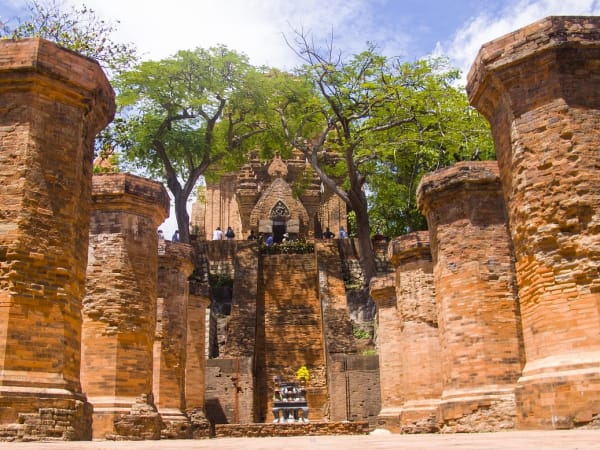
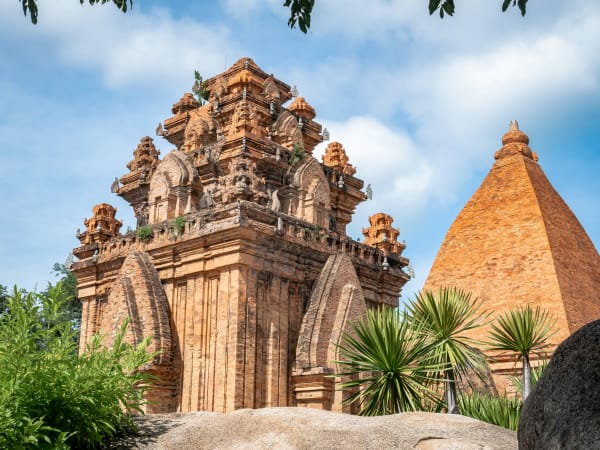
Po Nagar - Lady of the City - was the principal goddess of the Cham Kingdom, a Hindu-Buddhist civilisation that dominated central and southern Vietnam from the 2nd to the 15th century. The temple complex on the granite hill above the Cái River mouth in Nha Trang was first built in the 7th century and progressively expanded over five centuries, with the main tower dating to 817 AD under the reign of Vikrantavarman III. Four towers remain of an original complex of seven or more - the main north tower (23 metres), the central tower, the south tower, and the northwest tower - each built of fired brick using a Cham construction technique that archaeologists still debate: the bricks appear to have been bonded without mortar, using a resin-based adhesive that has preserved the structures for over a millennium. The complex remains an active place of worship for both the local Vietnamese Buddhist community and Hindu pilgrims - incense smoke and fresh flower offerings are present at every altar.
Gallery


How to Get There
🚗 Getting There
Po Nagar Cham Towers are 2km north of central Nha Trang, at the northern end of the city across the Xóm Bóng Bridge on the Cái River. From the central beach strip, the towers are 10 minutes by Grab or xe ôm. The entrance is on 2 Tháng 4 Street at the base of the granite hill - a staircase of 21 steps leads to the tower complex at the top. Parking is available at the base. Most visitors combine the towers with a morning at Nha Trang Beach and an afternoon island tour as part of a standard Nha Trang day.
What to Expect
👀 On the Ground
The complex sits on a hill with views over the Cái River estuary, the fishing village below, and the mountains inland. The four towers are arranged on a terrace - the main north tower dominates the complex with its multi-tiered roof and the active shrine inside containing the black stone Po Nagar statue draped in silk and surrounded by offerings. The architecture combines sandstone carvings (dancing figures, mythological scenes, Sanskrit inscriptions) with fired brick construction - the contrast between the worn carvings and the intact brickwork shows the different rates at which the materials have aged. A covered pavilion on the lower terrace has additional altars and is used for festival ceremonies. The atmosphere is genuinely devotional rather than purely touristic.
Travel Tips
🧳 Tips
Po Nagar is the most historically significant site in Nha Trang and consistently undervisited relative to the beach and island tours. The towers require about 45–60 minutes to explore properly - allow time to look at the carvings in detail, sit in the main tower interior, and take in the river view from the hilltop. The Cham civilisation is one of the least understood of Southeast Asia's great kingdoms and the towers provide a tangible connection to a culture that shaped the entire region. For travellers with an interest in history or religious architecture, Po Nagar is the most rewarding stop in Nha Trang.
Insider Tips
Based on real traveler experiences and commonly mentioned advice from multiple visitors.
FAQ
Common questions from travelers who've visited this place.
What is the entrance fee and what does it include?›
What should I wear to visit Po Nagar Temple?›
When is the best time to visit to avoid crowds?›
Nearby Locations
Explore more things to do like this around Vietnam