Overview
Things to Know
What Makes Long Sơn Pagoda Special
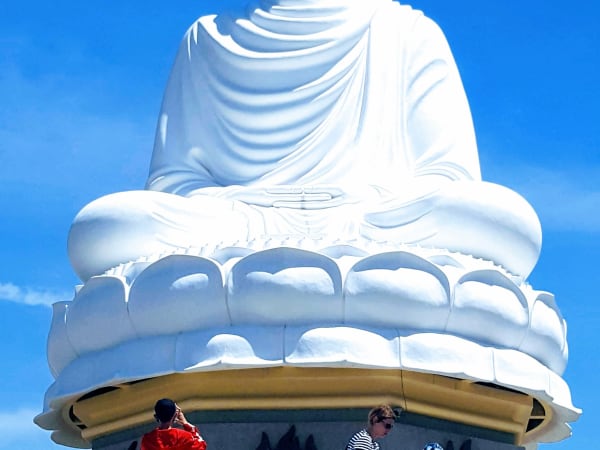
Long Sơn Pagoda was established in 1886 and has been rebuilt and expanded several times since, most recently in the 1940s after storm damage. The pagoda sits at the foot of Trại Thủy Hill in central Nha Trang - the hill is topped by a large white seated Buddha (Kim Thân Phật Tổ) added in 1964, visible from across the city and from the bay. The pagoda became historically significant during the Buddhist Crisis of 1963, when the monks here were among those who protested against the anti-Buddhist policies of President Ngô Đình Diệm's government - the same movement that led to Thích Quảng Đức's self-immolation in Saigon. A marble monument in the pagoda's courtyard commemorates the monks who died during this period. The White Buddha at the summit, reached by 152 steps flanked by dragon staircases, has become the visual symbol of Nha Trang alongside the bay itself.
Gallery



How to Get There
🚗 Getting There
Long Sơn Pagoda is in central Nha Trang, 500 metres from the train station on Đường 23/10 Street - within walking distance of most central accommodation and the train station. By Grab or taxi from the beach strip, about 10 minutes. The pagoda entrance is at street level; the hill climb to the White Buddha begins from the rear of the main courtyard.
What to Expect
👀 On the Ground
The main pagoda hall at street level is a traditional Vietnamese Buddhist structure with ornate carved and lacquered interior, large Buddha statues, and active worship. The courtyard has the memorial to the 1963 protest monks. From the rear of the courtyard, dragon-decorated staircases climb the hillside on both sides of the central steps - 152 steps total, steep but manageable, with landings at intervals. The White Buddha at the summit is 14 metres tall, seated, and faces the city. The surrounding terrace gives panoramic views over Nha Trang - the bay, the bridge, the city grid, and the mountains behind.
Travel Tips
🧳 Tips
Long Sơn Pagoda is the best free attraction in Nha Trang and consistently underutilised by visitors focused on the beach and islands. The hilltop view is the best elevated perspective over the city and bay available without paying for a cable car or rooftop bar. The historical connection to the 1963 Buddhist Crisis adds a layer of significance that most beach-focused visitors are unaware of. Allow 45–60 minutes including the climb and descent - easy to combine with a morning at the train station (500 metres away) or as a standalone half-hour stop.
Insider Tips
Based on real traveler experiences and commonly mentioned advice from multiple visitors.
FAQ
Common questions from travelers who've visited this place.
Is there an entrance fee?›
What should I wear to visit?›
How long does a visit take?›
Nearby Locations
Explore more things to do like this around Vietnam