Overview
What Makes Notre-Dame Cathedral Saigon Special
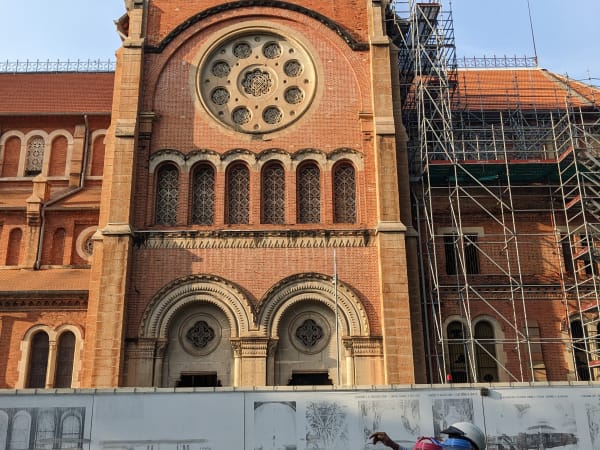
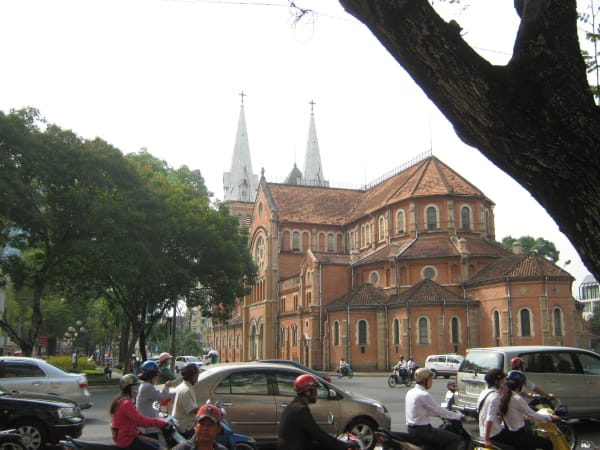
Notre-Dame Cathedral Saigon stands at the junction of Đồng Khởi and Nguyễn Du streets in central District 1, constructed between 1863 and 1880 under French colonial administration from materials shipped entirely from France - the red bricks from Marseille, the stained glass windows from Chartres. The twin bell towers rise 57 metres and have been a defining element of the central Saigon skyline for over 140 years. The cathedral is formally known as the Basilica of Our Lady of The Immaculate Conception and remains an active Catholic parish, though the interior has been closed since 2017 for a major structural restoration expected to last several years. The exterior and the surrounding Paris Commune Square retain their character as one of the most visited public spaces in Ho Chi Minh City.
Gallery






How to Get There
🚗 Getting There
The cathedral is located in the heart of District 1, at the top of Đồng Khởi street approximately 1km from Bến Thành Market. From most District 1 hotels, it is within walking distance. The adjacent Ben Thanh - Suoi Tien metro line has a station nearby. Grab or taxi from anywhere in central Ho Chi Minh City takes under 15 minutes. The cathedral is a natural stop on any walking tour of the French colonial architecture cluster in District 1.
What to Expect
👀 On the Ground
The visit centres on the exterior - the red brick neo-Romanesque facade with its twin towers and the open square in front are the main visual elements. The square contains a statue of the Virgin Mary that has been a site of reported apparitions and draws a steady stream of Catholic pilgrims alongside general tourists. The Central Post Office immediately adjacent to the cathedral was designed by Gustave Eiffel's firm and is worth entering - it remains fully operational and its interior iron-frame architecture is one of the finest colonial-era interior spaces in Vietnam. Together the cathedral exterior and the post office interior make for a coherent 45-minute visit.
Travel Tips
🧳 Tips
The cathedral is best understood as an urban landmark and a piece of French colonial city-building rather than primarily as a religious site or a building to enter. Its value is in what it represents about the transformation of Saigon under French administration and its continued centrality to the city's public life. The restoration, when complete, should return access to the interior with its original Chartres stained glass - checking the current status on arrival is worthwhile. Evening visits when the facade is lit offer a different photographic character from the daytime red brick.
Insider Tips
Based on real traveler experiences and commonly mentioned advice from multiple visitors.
Nearby Locations
Explore more things to do like this around Vietnam