Overview
Things to Know
What Makes Đầm Trầu beach Special
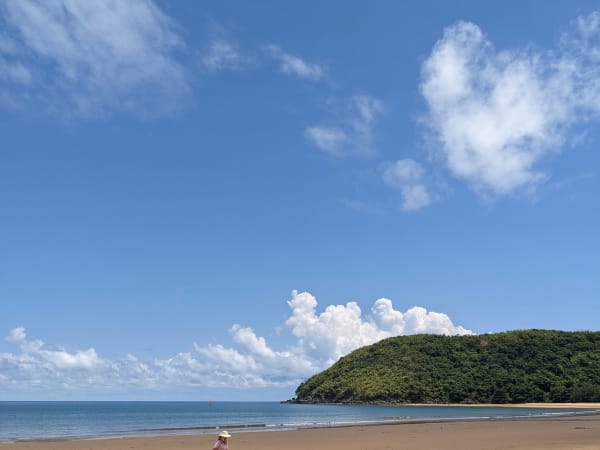
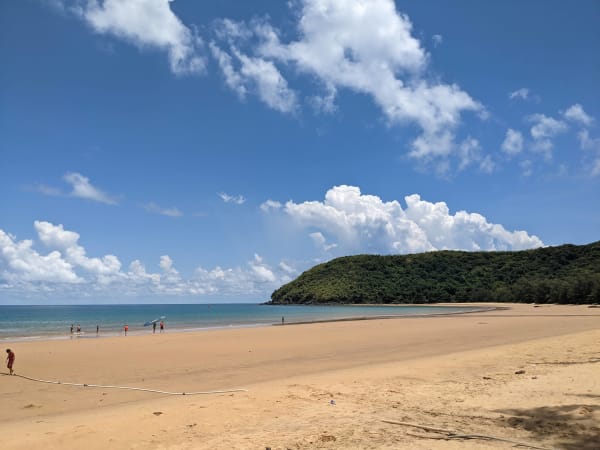
Bãi Đầm Trầu takes its name from a legend of impossible love: a young man named Cau rescued a girl named Trầu from drowning at sea, and the two fell for each other - only to discover they were half-siblings. Cau fled to another island, where a betel palm grew on his grave, giving that island its name, Hòn Cau. Trầu returned each day to the cliff where they had met, and when the truth finally reached her, she threw herself into the sea. The bay where she fell is Đầm Trầu. The legend aside, the beach itself is one of the most distinctive in Vietnam: a 3.3-hectare crescent of fine white sand backed by dense primary forest, with rocky outcrops, a coral reef visible in the shallows, and a peculiarity that earns it a category of its own - the beach sits directly underneath the approach path to Cỏ Ống Airport. Multiple times a day, aircraft pass low overhead as they come in to land, close enough to feel the engines, creating one of the most photogenic and improbable beach backdrops in the country. In 2021, Travel + Leisure ranked it among the top 25 most beautiful beaches in the world.
Gallery


How to Get There
🚗 Getting There
Bãi Đầm Trầu is 14km north of Con Son town, very close to Cỏ Ống Airport. From the town centre, follow the Cỏ Ống road north - the beach is well-signposted and the route passes through forested sections with gentle hills before descending to the coast. By motorbike the journey takes 25–30 minutes; by taxi about 20 minutes. From the airport itself, it is only 5–10 minutes away - worth stopping at if arriving by air. To reach Côn Đảo: fly direct from Ho Chi Minh City (around 45 minutes), or take a high-speed ferry from Vũng Tàu (about 3–4 hours) or from Trần Đề port in Sóc Trăng (about 2 hours).
What to Expect
👀 On the Ground
The beach curves in a crescent shape, bordered on both sides by rocky headlands with coral and rock pools. The water is clear and calm enough for swimming and snorkelling close to shore; the coral reef is accessible without a boat. The forest at the back of the beach provides intermittent shade and the air is noticeably cooler than the open coast. The main draw beyond the sand and water is the plane-spotting: flights approach from the north and pass very low directly over the beach before touching down on the runway just behind the tree line. Basic food stalls operate seasonally near the beach. There are no permanent facilities, which contributes to the beach's relatively undeveloped character despite its international recognition.
Travel Tips
🧳 Tips
Bãi Đầm Trầu works best as a half-day trip combined with Bãi Suối Nóng - a small secluded beach accessible on foot through a short forest trail from Đầm Trầu's eastern end. Overnight camping is one of the better ways to experience the beach: the evening light is exceptional, the crowds thin out completely after late afternoon, and the sound of the forest at night is unlike anything in Vietnam's more commercialised beach destinations. Côn Đảo as a whole has very limited ATMs (only two on the island as of 2024), so bring enough cash before you arrive. Snorkelling gear should ideally be packed from the mainland.
Insider Tips
Based on real traveler experiences and commonly mentioned advice from multiple visitors.
FAQ
Common questions from travelers who've visited this place.
What are the entry and parking fees?›
Can I see planes landing clearly?›
Is the beach clean and safe for swimming?›
Nearby Locations
Explore more things to do like this around Vietnam