Overview
Things to Know
What Makes Bãi Nhát Special
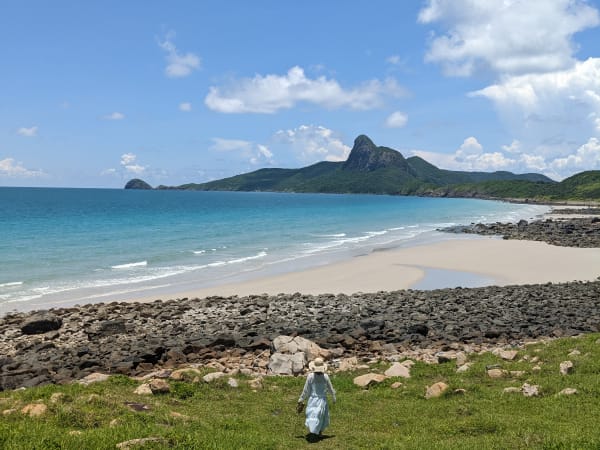
Bãi Nhát sits on the southwestern coast of Côn Đảo, on the road between Con Son town and Bến Đầm port, about 6km from the town centre. The name has an ironic origin: the beach was formerly a rubbish dump used by local residents, known informally as Bãi Rác (Rubbish Beach). After years of clean-up and ecological restoration, it was renamed Bãi Nhát - southern Vietnamese slang that nodded to its transformation - and is now ranked among the top six wild beaches in Asia. The beach covers 13.6 hectares within Côn Đảo National Park's ecological restoration zone. Its defining characteristic is tide-dependence: at high tide, the sand disappears completely under the sea, leaving only the boulder field exposed. As the tide recedes, a long stretch of white sand gradually emerges, and the multicoloured rocks - shaped over hundreds of years by sun, salt, and wave - become the main event. Beside the beach is a stone stele commemorating 198 prisoners from Côn Đảo Prison who attempted a mass escape in 1952. The escape failed, but it is remembered as one of the most significant acts of resistance against the French colonial prison administration.
Gallery

How to Get There
🚗 Getting There
Bãi Nhát is on Đường Bến Đầm, the coastal road connecting Con Son town to Bến Đầm port. From the town centre, head south and follow the coast road for about 6km - the beach is visible from the road and clearly signed. The route is one of the most scenic on the island: one side is jungle-covered hillside, the other is open sea. By motorbike it takes about 15 minutes; by bicycle about 30–40 minutes. Taxis are available in Con Son town if needed. To reach Côn Đảo itself: fly from Ho Chi Minh City (45 minutes), or take a high-speed ferry from Vũng Tàu or Trần Đề port.
What to Expect
👀 On the Ground
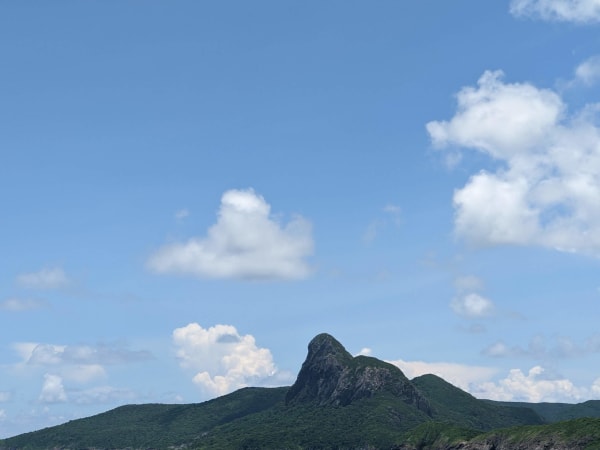
The beach stretches from Cửa Tử at Hòn Bà to Mũi Cá Mập (Shark Point), facing east-southeast. The sand section is relatively short but the boulder field extends the full length of the shoreline, and the rocks are the real attraction for photography - stacked, layered, and patterned in shades of grey, ochre, and rust. The water is clear and shallow close to shore, suitable for swimming when the sand is exposed. Looking west from the beach, the silhouette of Đỉnh Tình Yêu (Love Peak) fills the horizon - a mountain that from certain angles resembles two figures with their arms around each other. At sunset, the light falls directly behind the peak and reflects across the sea in what is widely regarded as the best sunset view on Côn Đảo.
Travel Tips
🧳 Tips
Bãi Nhát rewards timing above almost everything else: the wrong tide turns it into a rock field with nothing to swim in; the right tide paired with sunset light makes it extraordinary. The most practical approach is to arrive in the mid-to-late afternoon when the tide is dropping, swim for an hour or two, then stay for the sunset. November to December is worth noting for photographers - the algae season coats the boulders in vivid green, which photographs very differently from the dry-season rock textures. The beach is quiet relative to more accessible spots on the island, and the coastal road itself is worth riding slowly in both directions.
Insider Tips
Based on real traveler experiences and commonly mentioned advice from multiple visitors.
FAQ
Common questions from travelers who've visited this place.
When is the best time to visit for swimming and water clarity?›
Should I worry about the landfill near the beach?›
What time should I arrive to avoid sunset crowds?›
Nearby Locations
Explore more things to do like this around Vietnam