Overview
Things to Know
What Makes Bái Đính Pagoda Special
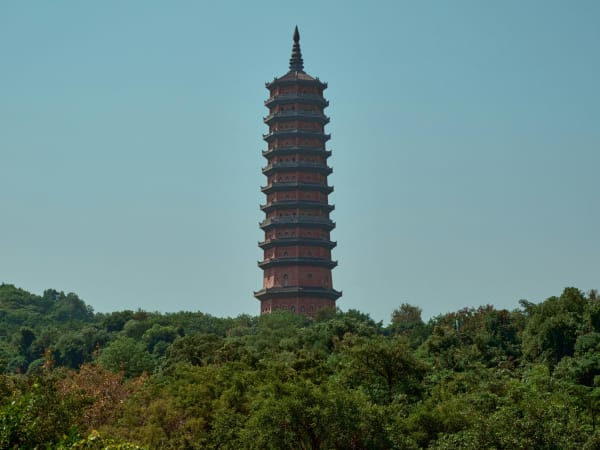
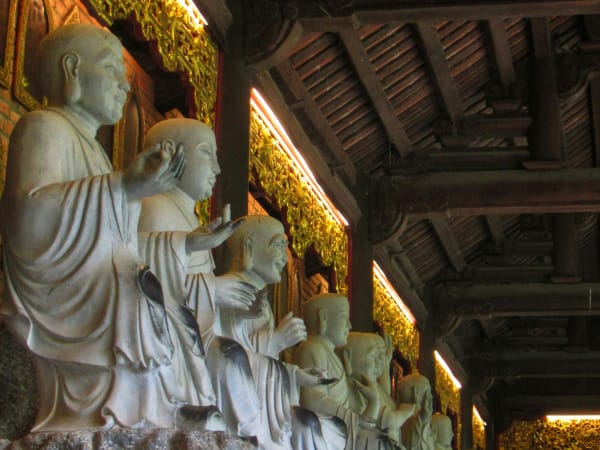
Bái Đính Pagoda complex is the largest Buddhist complex in Vietnam and one of the largest in Southeast Asia - a hilltop development of temples, bell towers, corridors, and shrines covering 539 hectares on a limestone ridge above Gia Sinh village, 12km west of Ninh Bình city. The new complex, constructed from 2003 and inaugurated in phases from 2010, holds multiple Vietnamese records: the largest bronze Shakyamuni Buddha (100 tonnes, 10 metres), the longest arhat corridor in Vietnam (500 uniquely carved stone statues in 1.5km), the largest bronze bell in Vietnam (36 tonnes), and the largest number of monks in residence. The modern complex was built on the site of older religious structures - the original Bái Đính cave pagoda, dating to the 11th century and associated with the monk Nguyễn Minh Không, still exists on the hillside 300 metres from the modern entrance and remains a more intimate and historically significant site than its much larger neighbour.
Gallery


How to Get There
🚗 Getting There
Bái Đính Pagoda is 12km west of Ninh Bình city via Highway 38. By motorbike from Ninh Bình town, about 20–25 minutes. By bicycle, about 50 minutes on flat roads. The complex is also accessible from Tràng An - the two sites are 5km apart and connected by a scenic rural road, making a combined visit the standard Ninh Bình day itinerary. The main entrance has a large car park. Electric carts run continuously from the entrance to the upper temple complex (~50,000 VND one way).
What to Expect
👀 On the Ground
The scale is the defining characteristic of Bái Đính - the main bell tower rises 27 metres, the Quan Âm (Guanyin) statue reaches 9 metres, and the arhat corridor stretches 1.5km along the hillside. The 500 arhat statues - each representing an enlightened disciple of the Buddha - are carved from grey stone in distinctive individual poses and expressions, arranged in covered corridors on both sides of the main path. The main temple complex at the summit has three halls: the hall of the jade Buddha, the triple Buddha hall with the 100-tonne bronze Shakyamuni, and the bell tower. The views from the upper level look north over the Tràng An karst landscape and the Ninh Bình river plain.
Travel Tips
🧳 Tips
Bái Đính is an exercise in scale rather than subtlety - the complex is monumental, modern, and unapologetically large. It receives more Vietnamese visitors per year than any other religious site in Ninh Bình, and the atmosphere on a busy day is that of a national pilgrimage site: incense, chanting, family groups, and a sense of civic pride in Vietnam's largest religious complex. For international travellers who prefer the intimate character of older religious sites, the ancient cave pagoda 300 metres from the main entrance is the more rewarding option. For travellers interested in contemporary Vietnamese Buddhist expression at its most ambitious scale, Bái Đính is unlike anything else in the country.
Insider Tips
Based on real traveler experiences and commonly mentioned advice from multiple visitors.
FAQ
Common questions from travelers who've visited this place.
How long should I spend at Bai Dinh Pagoda?›
Is the electric car/tram service worth purchasing?›
When is the best time to visit to avoid crowds?›
Nearby Locations
Explore more things to do like this around Vietnam