Overview
What Makes Tà Đùng Lake Special
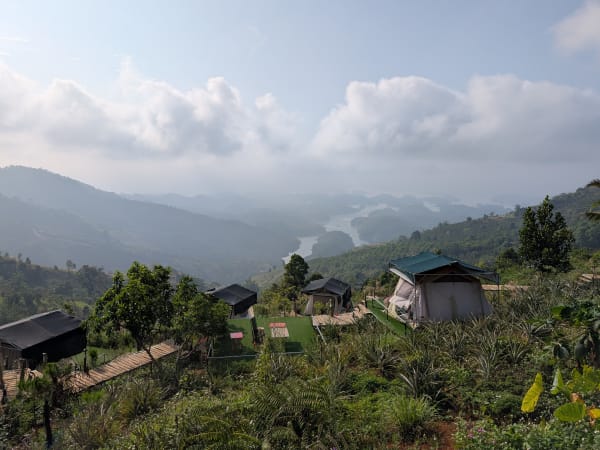
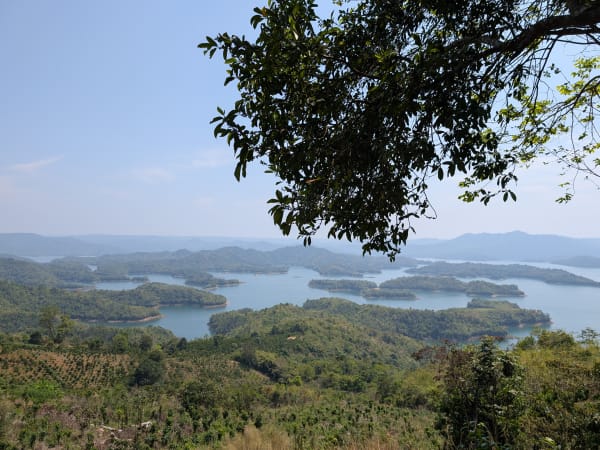
Tà Đùng Lake is a large reservoir in Đắk Nông province, formed by the construction of the Đồng Nai 3 hydroelectric dam and officially designated part of Tà Đùng National Park. The reservoir has flooded a large area of highland forest, leaving 37 forested islands of varying sizes rising from the water - a landscape that has earned Tà Đùng the informal title of 'Hạ Long Bay of the Central Highlands', though the two places share only the visual logic of forest-covered landmasses emerging from calm water. The national park surrounding the lake contains primary montane forest at elevations between 700 and 1,000 metres, with recorded wildlife including gibbons, hornbills, sun bears, and several endemic plant species. The lake itself covers approximately 3,600 hectares and is navigable by kayak, motorboat, and small wooden craft - the island-dotted surface, the forested shoreline, and the Central Highlands light make it one of the most photogenic freshwater landscapes in southern Vietnam.
Gallery


How to Get There
🚗 Getting There
Tà Đùng Lake is located in Đắk Glong district, approximately 60km from Gia Nghĩa city (the provincial capital of Đắk Nông) and 170km from Đà Lạt. The access road runs via Đắk Som commune from the main highway. From Gia Nghĩa, the drive takes about 1.5 hours by motorbike or car. From Đà Lạt, the route passes through Bảo Lộc in Lâm Đồng before entering Đắk Nông - allow 3.5-4 hours. There is no direct public transport; motorbike or private vehicle is required for the final approach. Gia Nghĩa is accessible by bus from Hồ Chí Minh City (6-7 hours).
What to Expect
👀 On the Ground
The main boat launch area near Đắk Som has a small visitor infrastructure: boat rentals, a few food stalls, and a national park office where guides and camping permits can be arranged. The lake is calm and the islands accessible - a basic kayak circuit of the nearest islands takes 2-3 hours. The landscape is unusual by Vietnamese standards: the combination of tropical forest, the still water surface, and the irregular island shapes creates a scene that looks simultaneously natural and engineered. In the dry season, sections of submerged forest are visible above the waterline, with the bleached trunks of drowned trees adding a stark element to the scene. Gibbons are occasionally heard calling from the larger islands in the early morning.
Travel Tips
🧳 Tips
An overnight stay is the best way to experience Tà Đùng - either camping on one of the designated islands or staying in basic accommodation in Đắk Som village. The early mornings, when mist covers the water and the forest sounds start before dawn, are the defining experience. Tà Đùng fits naturally into a Central Highlands circuit that includes the coffee and pepper country around Gia Nghĩa, the basalt plateau landscapes of Đắk Nông, and the volcanic crater lake at Tà Đùng Natural Reserve nearby.
Insider Tips
Based on real traveler experiences and commonly mentioned advice from multiple visitors.
Nearby Locations
Explore more things to do like this around Vietnam