Overview
Things to Know
What Makes Cape Cà Ná Special
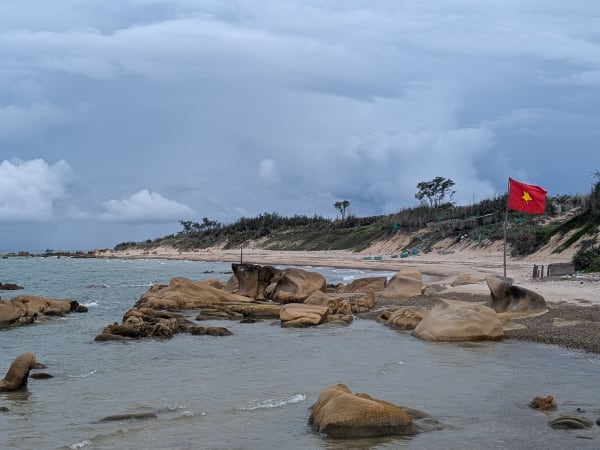
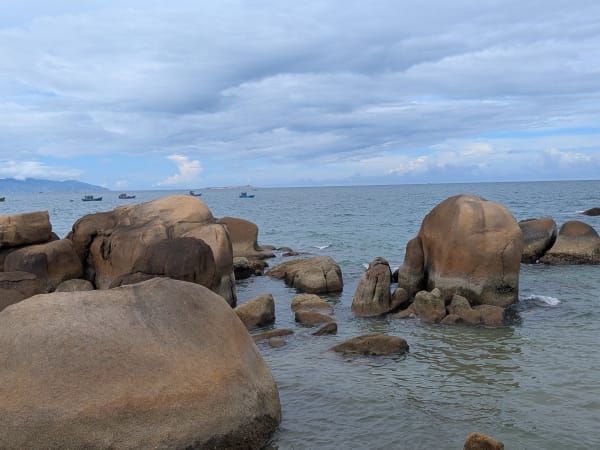
Cape Cà Ná sits on the southern Ninh Thuận coastline where Highway 1A rounds a granite headland between the sea and the near-desert interior. The landscape here is unlike any other stretch of the Vietnamese coast: Ninh Thuận receives less annual rainfall than almost any province in the country, and the vegetation inland from the shore is sparse scrub and cactus rather than the tropical greenery found north and south. The cape itself is a mass of rounded granite boulders that descend directly to the sea - weathered into smooth forms by millennia of wave action, arranged in the chaotic geometry of a collapsed rockfall. The combination of bare rock, clear blue water, and the arid backdrop creates a distinctive visual character that makes Cà Ná one of the most recognisable coastal landmarks for anyone riding or driving the length of Vietnam.
Gallery






How to Get There
🚗 Getting There
Cape Cà Ná is located on Highway 1A in Thuận Nam district, approximately 30km south of Phan Rang city and 130km north of Phan Thiết. The cape is directly on the main highway - no detour is required. By motorbike or car from Phan Rang (the nearest significant town), the drive takes about 30-40 minutes south. From Phan Thiết, the journey is approximately 2 hours north. The roadside pullout at the cape is clearly identifiable from the highway - the boulder formations are visible from the road. Parking is informal on the highway shoulder.
What to Expect
👀 On the Ground
The boulder field extends from the roadside down to the waterline - a scramble of 5-10 minutes reaches the lower rocks at sea level. The granite surfaces are smooth and the formations create natural seats and platforms overlooking the water. The sea at the base of the boulders is clear and relatively calm in the dry season. A small beach occupies the sheltered bay adjacent to the headland. The fishing village of Cà Ná is visible nearby - a working community with boats, nets, and the infrastructure of the local seafood trade. The surrounding landscape is visibly arid: the hills behind the cape are brown and rock-strewn with little vegetation cover.
Travel Tips
🧳 Tips
Cà Ná works best as a stop on a longer coastal journey rather than a standalone destination - the appeal is the visual impact of the landscape and the opportunity to stretch the legs on a boulder scramble, not a full day's itinerary. For riders on the Hanoi to Ho Chi Minh City route, the cape marks the beginning of the most visually distinctive section of the southern coastal run - the Ninh Thuận and Bình Thuận coast between here and Mũi Né has the most dramatic scenery of the entire route. Budget 30-60 minutes at the cape itself, eat at the village if the timing works, and continue.
Insider Tips
Based on real traveler experiences and commonly mentioned advice from multiple visitors.
FAQ
Common questions from travelers who've visited this place.
Is Cà Ná beach safe for swimming?›
When is the best time to visit Cà Ná beach?›
What should I eat at Cà Ná?›
Nearby Locations
Explore more things to do like this around Vietnam